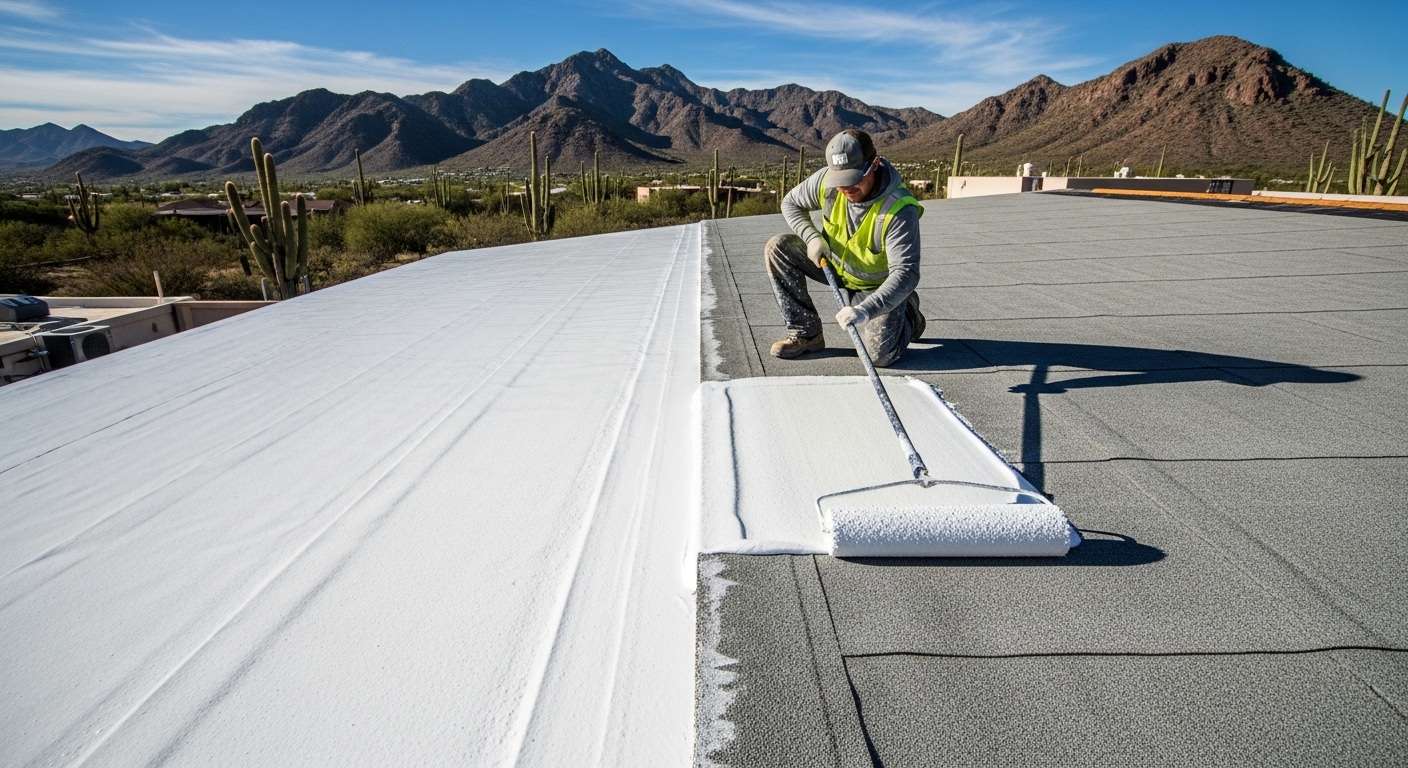
Sprayed Polyurethane Foam (SPF) roofs are incredibly popular on modern homes, commercial buildings, and patio additions throughout Phoenix (85012) and the East Valley (85206). They offer unmatched insulation and are virtually seamless. However, foam has one fatal weakness: it rapidly disintegrates when exposed to direct ultraviolet (UV) light.
To protect the foam, roofing contractors apply a specialized, highly reflective elastomeric or silicone coating over it. But in the extreme Arizona desert, this protective coating is slowly baked away year after year. Once the coating wears thin, the foam beneath begins to deteriorate. If left unmaintained, a perfectly good roof will turn to dust, leading to severe interior monsoon leaks and a massive $10,000+ replacement bill.
The 5 Warning Signs You Need a Recoat
You shouldn't wait for water to drip onto your living room floor. Generally, a high-quality elastomeric coating in Phoenix will last 5 to 10 years depending on the thickness applied and sun exposure. Here is what to look for when inspecting your flat roof:
- Chalking: If you rub your hand across the white roof surface and it comes away covered in a fine, white powdery dust, the coating is oxidizing and wearing away.
- "Orange Peeling" or Yellowing: Once the white protective coating is completely gone, the raw SPF foam is exposed to the sun. Raw foam turns a dark yellow or orange color and develops a brittle, "orange peel" texture. If you see yellow foam, you are racing against the clock.
- Bird Pecks & Punctures: Pigeons and woodpeckers in the Valley often peck at exposed foam roofs. If the protective coating is compromised, they can easily dig holes right through the insulation layer.
- Gas Blisters: When moisture gets trapped under the coating, the intense Arizona sun heats it up, turning the water into a gas that pushes up against the coating, forming a bubble or "blister." These blisters will eventually pop and leak.
- Ponding Water: After a summer monsoon, your roof should be mostly dry within 48 hours. If water is pooling heavily ("birdbaths"), it accelerates the breakdown of the coating in that specific area.
What Happens If You Ignore the Signs?
Many homeowners assume a flat roof is fine as long as it isn't actively dripping. This is a dangerous assumption with foam roofs. When the protective coating fails, the raw foam acts exactly like a giant sponge. During a monsoon rain, that exposed foam absorbs massive amounts of water.
As the foam logs with water, it gains immense weight. This adds extreme stress to the structural decking of your home, causing it to sag, which creates even deeper "birdbaths" that hold more water in a vicious cycle. Eventually, the water permeates the OSB decking, causing dry rot and black mold to bloom in your attic. At this stage, a simple recoat is no longer possible—the entire roof must be torn off and structurally rebuilt.
The Professional Recoating Process: What to Expect
A successful roof recoating isn't just about slapping down a fresh layer of paint. It requires intensive preparation. If you hire a professional team like Roofing AZ, here is the exact process you should expect:
- Step 1: Intensive Power Washing. The entire roof is aggressively pressure-washed to remove the "chalk," desert dust, and loose debris. New coatings will instantly peel if applied over dirt.
- Step 2: Blister Excavation. Any trapped gas bubbles or wet foam patches are physically cut out. The hole is allowed to dry, and a new polyurethane patch is installed to level the surface.
- Step 3: Mastic & Mesh Detailing. We identify highly vulnerable areas—like AC unit curbs, skylight bases, and parapet wall seams—and seal them heavily with roofing mastic embedded with polyester mesh fabric for extra flexibility.
- Step 4: Multi-Pass Application. The actual liquid elastomeric or silicone coating is applied. This is done in multiple, cross-hatched layers to achieve the manufacturer's required "mil thickness" for a proper warranty.
DIY vs. Professional Recoating: Why You Shouldn't Risk It
It can be tempting to buy a 5-gallon bucket of white roof coating from a big-box hardware store and roll it on yourself over the weekend. However, DIY foam roof coatings almost always fail prematurely for three reasons:
- Inadequate Prep Work: Most homeowners do not possess commercial-grade pressure washers, leaving a micro-layer of dust that prevents the new coating from bonding.
- Incorrect Mil Thickness: Applying the coating too thin offers no real UV protection; applying it too thick in one pass causes it to cure incorrectly and split open.
- Warranty Voiding: Premium silicone coatings (which offer the best defense against Arizona ponding water) require precise chemical catalysts and certified installation to activate their 10-to-50-year warranties.
Why Recoating is the Ultimate Money Saver
The beauty of an SPF foam roof is that as long as you meticulously maintain the top coating, the roof can theoretically last forever. Here is why timely maintenance is critical for your wallet:
Timely Recoat
If the foam is still dry and structurally sound, we simply clean the roof, patch minor blisters, and apply a new liquid elastomeric or silicone coat.
Full Tear-Off
If the foam is yellowed, cracked, and saturated with water, it must be completely scraped off down to the wood deck, re-sprayed, and then coated.
By recoating every 5-10 years, you completely avoid the massive labor and landfill disposal fees associated with tearing off a ruined foam roof.
Silicone vs. Elastomeric Acrylic Coatings
When it is time to recoat, you have two primary options. Elastomeric Acrylic is the traditional standard. It is bright white, highly reflective, and stretches well. However, it will break down if submerged in standing water.
If your Phoenix roof suffers from poor drainage, we highly recommend upgrading to a 100% Silicone Roof Coating. Silicone is completely impervious to standing water and will not degrade or wash away, offering the absolute best long-term protection for flat roofs in the desert.
The "Cool Roof" Effect
A fresh, bright white coating reflects up to 85% of UV rays. This drops the surface temperature of your roof by up to 50 degrees, drastically reducing the strain on your air conditioning unit during the Arizona summer.
Don't wait until your foam turns yellow. If it has been more than 5 years since your flat roof was last coated, contact us today for a free assessment. We will evaluate the health of your foam and provide an honest, no-pressure quote for restoration before permanent damage sets in.