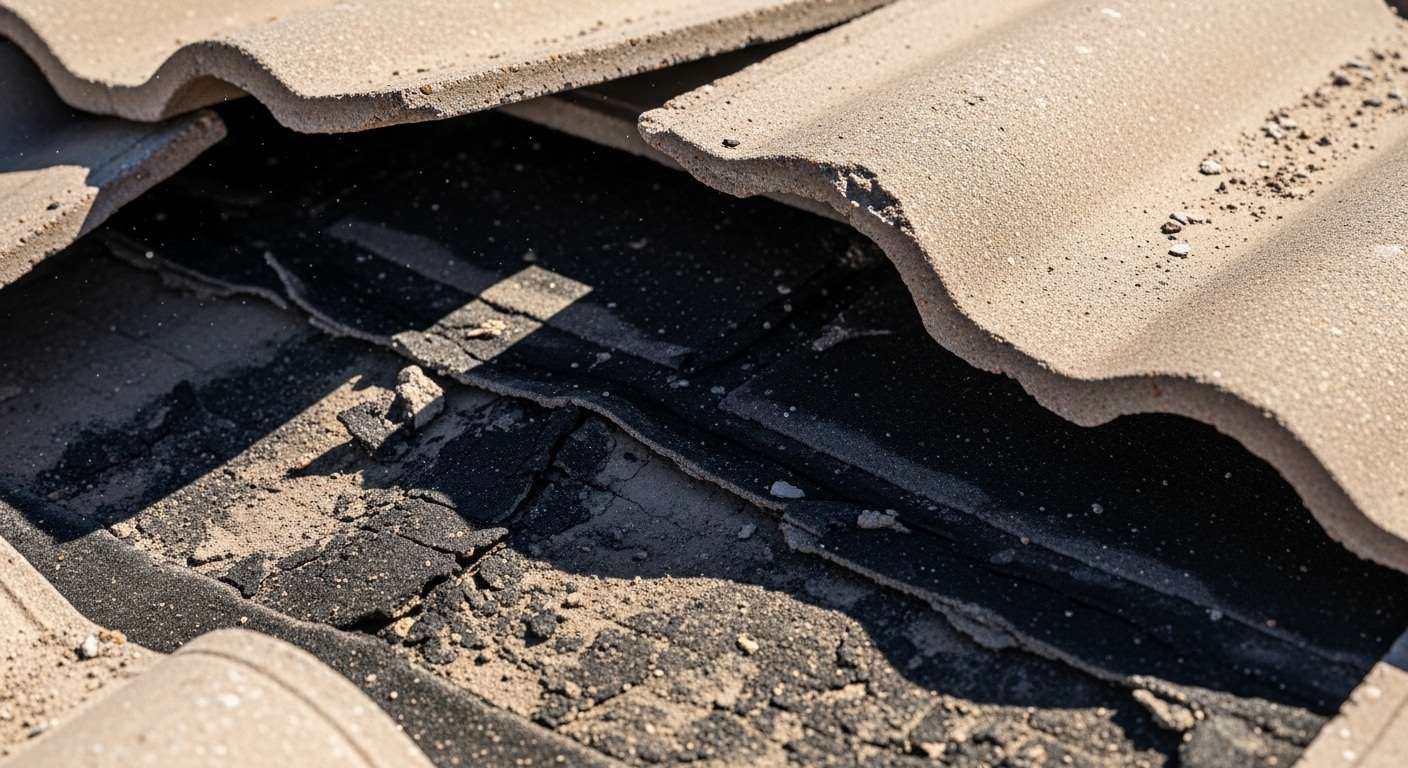
If you own a home in Central Phoenix (85012), Scottsdale, or the master-planned communities of East Mesa (85206), there is a very high probability you have a concrete or clay tile roof. Tile roofs are beautiful, heavy, and architecturally appropriate for the Sonoran Desert. But they hide a dirty little secret.
Many Arizona homeowners operate under the dangerous assumption that their tile roof will last 50 to 100 years. While it is true that the concrete tiles themselves will survive for generations, the roof as a "system" will not. The most critical component of your roof is completely hidden from view, and in the Phoenix heat, it is actively deteriorating.
The Anatomy of a Tile Roof
To understand the danger, you must understand how a tile roof works. Concrete tiles are not waterproof. They are "water-shedding." Their primary job is to act as heavy armor against monsoon microbursts and to take the brunt of the extreme UV radiation. However, when it rains, water naturally blows under and between the gaps in the overlapping tiles.
The actual barrier that stops that water from entering your attic is the underlayment—the layer of tar paper (asphalt-saturated felt) stapled to the wood decking beneath the tiles.
The Desert Baking Process
During a typical Phoenix summer, outside temperatures hit 115°F. Underneath those thick concrete tiles, the radiant heat pushes attic temperatures to 140°F or more. Your underlayment is trapped in an oven.
Over time, this relentless heat causes the natural oils in the asphalt felt paper to literally evaporate. The paper dries out, turns brittle, and begins to crack and crumble to dust. The industry consensus in Arizona is that standard 30lb felt underlayment has a maximum lifespan of 20 to 25 years.
The Danger Zone
If your home was built between 1995 and 2005 (like many in Mesa and the East Valley) and you have not had your underlayment replaced, you are operating on borrowed time. Your underlayment is likely severely compromised, meaning the next heavy monsoon downpour could wash right through the tiles and directly into your drywall ceilings.
Signs Your Underlayment is Failing
Because the underlayment is hidden, you cannot simply look at your roof from the driveway to determine its health. However, there are a few tell-tale signs that failure is imminent:
- Slipped Tiles Reveal "White" Paper: If a tile slips out of place during a storm, look at the paper underneath. If it looks white, grey, or chalky (instead of black), all the asphalt oils have evaporated. It is essentially useless.
- Bird Stop Debris: Check the "bird stops" (the metal trim at the bottom edge of your roof over your gutters). If you see chunks of black papery debris accumulating there, your underlayment is actively disintegrating and sliding down the roof.
- The "Patio/Garage" Leak: Often, the first place underlayment failure shows up is over un-insulated areas like the garage or an exterior patio, because these areas experience even more severe temperature fluctuations.
The Solution: The "Lift and Relay"
If your underlayment is shot, do you have to buy a $20,000+ brand new roof? Usually, no.
Because your concrete tiles are likely still perfectly fine, throwing them in a landfill is a massive waste of money. Instead, reputable local roofers perform a "Lift and Relay" (also known as an R&R). Here is the process:
- Our crews carefully remove your existing tiles and stack them securely on the roof.
- We completely tear off the brittle, old tar paper and inspect the bare wood decking for dry rot, replacing any soft wood.
- We install a premium, high-heat synthetic underlayment. Unlike old tar paper, modern synthetics are highly tear-resistant and do not dry out in the desert heat.
- Finally, we securely re-install your original tiles.
By saving your tiles, a Lift and Relay often saves homeowners 30% to 50% compared to the cost of a totally new roof, while providing the exact same decades-long watertight warranty.
Don't wait for a collapsed ceiling to tell you your underlayment has failed. If your Phoenix or East Valley home is approaching the 20-year mark, contact Roofing AZ today. We provide free, forensic roof assessments where we carefully lift a few tiles to show you exactly what is happening underneath.